If you think Hidden Hills is just another luxury enclave, the horse trails will quickly change your mind. This is a private, gated city where equestrian living is woven into the layout of the community, the design of the estates, and the rhythm of daily life. If you are exploring whether Hidden Hills fits your vision of privacy, land, and a true horse-friendly setting, this guide will show you what sets it apart. Let’s dive in.
What Makes Hidden Hills Different
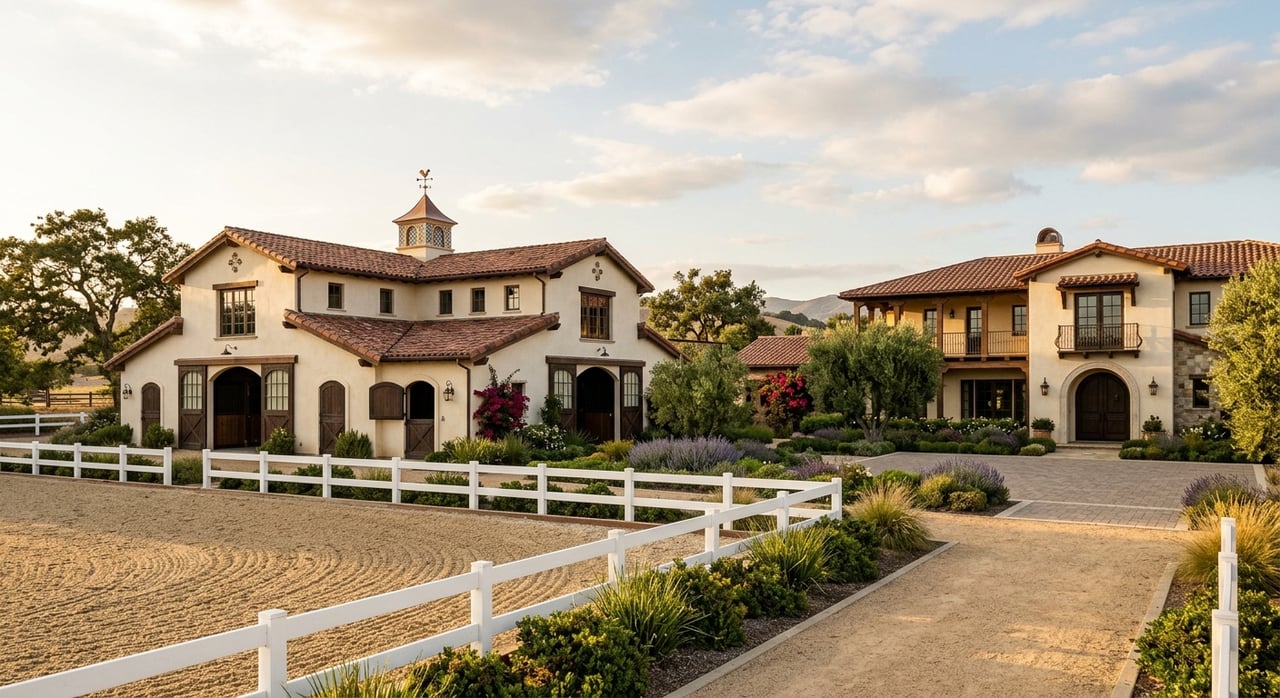
Hidden Hills is a small gated city in the western foothills of the San Fernando Valley near the Los Angeles and Ventura county line. Official city information describes a daily environment shaped by horses, white three-rail fences, bridle trails, and a weekly farmers market. The city reports about 1,700 residents, while the Hidden Hills Community Association reports nearly 2,000.
What gives the community its lasting identity is not just lot size, but intent. Hidden Hills was developed beginning in 1950 by A.E. Hanson as full-acre-lot country living, and city history shows that early community traditions included a horse show and roping exhibition. That history still shows up today in how the city looks, moves, and operates.
Equestrian Life Is Built In
In many luxury neighborhoods, horses are an amenity. In Hidden Hills, they are part of the infrastructure. The Hidden Hills Community Association, or HHCA, maintains 25 miles of bridle trails, three riding arenas, and a service framework that supports daily horse care.
That matters if you want more than a home with land. It means the community was designed to accommodate equestrian routines, from trail access to approved service providers such as veterinarians, farriers, trainers, stall cleaners, and animal feeders. This is one of the clearest reasons Hidden Hills continues to stand out in the Los Angeles luxury market.
The Bridle Trail Network
HHCA describes the internal trail system as about 25 miles of primarily off-road dirt trails. These trails are open only to equestrians and pedestrians. Vehicles of all kinds, including bicycles, scooters, golf carts, cars, trucks, and motorcycles, are prohibited.
That rule helps preserve the intended riding environment. For buyers who want a setting where horse use is not secondary to cars or recreational traffic, that level of protection is a defining part of the Hidden Hills lifestyle.
The Three Community Arenas
Hidden Hills supports equestrian life with three community riding arenas, each serving a practical role.
Saddle Creek Arena
Saddle Creek Arena includes a 300 by 120 team penning and gymkhana arena, a standard dressage arena, and a 60-foot round pen. This gives residents dedicated space for a range of riding disciplines and training routines.
Spring Valley Arena
Spring Valley Arena includes a 140 by 250 pipe arena, a two-thirds-size dressage arena, a 60-foot round pen, a snack shack, bathrooms, tennis courts, a park, and a children’s play area. HHCA also notes that Spring Valley is used for the yearly Fiesta and other equestrian events.
Lewis + Clark Arena
Lewis + Clark Arena includes an 80 by 190 pipe arena with hitching posts, a water trough, a drinking fountain, and an emergency phone. It is another example of how horse use here is supported by purpose-built community infrastructure, not improvised amenities.
Estate Living With Horse-Friendly Design
Hidden Hills is known for large residential parcels, and the city’s housing element says most parcels are at least one acre. The same document notes that zoning standards are designed to preserve the city’s rural equestrian character through large lots, low building coverage, and ample setbacks.
For you as a buyer, that design approach has real lifestyle value. Larger lots create room for long driveways, paddocks, barns, turnout areas, and estate-scale outdoor living, while still maintaining privacy and separation between homes. The result is a setting that feels more like a private countryside estate community than a conventional suburban luxury neighborhood.
A Residential-Only Setting
Another factor that shapes the atmosphere is what Hidden Hills does not include. The city’s housing element notes that it is almost entirely residential, with no commercial services inside the gates other than a real estate office near the 101.
That means daily life inside the gates stays visually consistent and quiet. For many luxury buyers, especially those seeking privacy and a more contained environment, that is part of the appeal.
What Buyers Should Know Before Purchasing
Buying in Hidden Hills is different from buying in many other Los Angeles luxury neighborhoods. The privacy, design standards, and community rules are part of what protect the environment, but they also affect how you evaluate a property.
If you are considering a purchase here, it helps to understand the community framework early.
Architectural Approval Matters
HHCA requires prior Architectural Committee approval for all exterior changes. That includes painting, windows, roofs, remodeling, landscaping, tree planting or removal, driveways, hardscape, retaining walls, and concrete work.
For a buyer looking at estate upgrades, this is important. If you are thinking about reworking outdoor areas, adjusting access points, or refining equestrian facilities, you should expect a structured approval process rather than a quick post-closing add-on.
Construction Rules Shape Planning
Building rules also limit construction hours and prohibit work on Sundays and holidays. For estate buyers planning renovations or improvements, that can affect timeline expectations.
In other words, Hidden Hills supports thoughtful stewardship of the community’s visual and rural identity. That tends to appeal to buyers who value consistency, order, and long-term preservation.
Home Tours Are More Private
The sales process itself is also more discreet than what you may see elsewhere. Hidden Hills prohibits open houses, bans for-sale signage, balloons, banners, and flags, and requires real estate agents to accompany prospective buyers while they are in the city.
That approach aligns with the expectations of many luxury clients. If privacy is a priority, Hidden Hills is structured to reduce casual traffic and keep showings more controlled.
Community Rhythm Beyond the Barn
While the equestrian identity is central, Hidden Hills is not one-dimensional. HHCA maintains community amenities that include four tennis courts, a competition-size pool, a recreation center, and a 99-seat theater.
The Community Center is open daily from 7:00 a.m. to 10:00 p.m., and the pool is heated year-round. HHCA also lists recreation offerings such as summer classes, a Valentine’s Musicale, and a Welcome Party, while the city promotes a weekly farmers market.
Fiesta and Local Tradition
Fiesta remains one of the signature community traditions. City history ties the event back to the early years of Hidden Hills, when celebrations included a horse show, a roping exhibition, barbecue, and entertainment.
That continuity matters because it shows Hidden Hills is not simply preserving an aesthetic. It is preserving a way of life that still shapes the community calendar and social identity.
Hidden Hills and the Surrounding Area
Hidden Hills offers a private internal environment, but it also benefits from broader regional riding access. Nearby, the Upper Las Virgenes Canyon Open Space Preserve spans more than 5,600 acres and includes equestrian access during daylight hours.
That gives riders access to a larger natural landscape beyond the gates. For buyers who want both contained community riding infrastructure and wider outdoor access, that nearby preserve adds another layer to the Hidden Hills appeal.
How It Compares to Nearby Calabasas
Calabasas provides useful context. Its Trails Master Plan is designed to create a continuous pedestrian, equestrian, and bicycle trail system that connects open spaces and public facilities.
Hidden Hills is more private and more restrictive by design. HHCA controls gate access, and the internal trail network is reserved for equestrians and pedestrians only. If you are comparing the two, the difference is less about prestige and more about lifestyle preference: broader public connectivity in Calabasas versus private, horse-centered seclusion in Hidden Hills.
Why Hidden Hills Appeals to Luxury Buyers
For many buyers, Hidden Hills offers a rare combination that is increasingly difficult to find in Los Angeles County. You get estate-scale parcels, a controlled and private setting, and a community where equestrian use is supported by actual infrastructure rather than marketing language.
You also get a place with a strong identity. The white fences, dirt trails, arenas, and residential-only layout create a distinct environment that feels intentional and protected. That kind of coherence is valuable in the luxury market because it helps preserve both lifestyle and long-term desirability.
The Value of Expert Guidance
Because Hidden Hills operates with its own community rules, gate protocols, showing standards, and architectural review structure, buying here benefits from careful planning. The right guidance can help you evaluate not just the house, but how the estate functions within the broader Hidden Hills framework.
If you are considering Hidden Hills as a primary residence, a legacy estate, or a private Los Angeles retreat with equestrian appeal, working with a team that understands discretion, estate presentation, and nuanced luxury transactions can make the process far smoother. To explore Hidden Hills opportunities with a white-glove, confidential approach, connect with the DeWalt Meneses Group.
FAQs
What makes Hidden Hills an equestrian community?
- Hidden Hills includes about 25 miles of bridle trails, three riding arenas, and community rules that support horse care through approved service providers such as veterinarians, farriers, trainers, stall cleaners, and animal feeders.
How large are lots in Hidden Hills?
- The city’s housing element says most residential parcels are at least one acre, and zoning is designed to preserve a rural equestrian character with large lots, low building coverage, and ample setbacks.
Can buyers make exterior changes to a Hidden Hills property?
- Exterior changes require prior approval from the HHCA Architectural Committee, including items such as painting, windows, roofs, landscaping, driveways, hardscape, retaining walls, and concrete work.
Are open houses allowed in Hidden Hills?
- No. Hidden Hills prohibits open houses and also bans for-sale signage, balloons, banners, and flags, while requiring agents to accompany prospective buyers in the city.
What amenities are available in Hidden Hills besides horse facilities?
- HHCA maintains amenities that include four tennis courts, a competition-size pool, a recreation center, and a 99-seat theater, along with community programming and events.
Is there riding access outside Hidden Hills?
- Yes. The nearby Upper Las Virgenes Canyon Open Space Preserve offers more than 5,600 acres with equestrian access during daylight hours.